

PRP Therapy (TGOC® Method)
About PRP Therapy (TGOC® Method)
We provide platelet-rich plasma (PRP) therapy using PRP prepared from your own blood. PRP therapy concentrates platelets from your blood and injects them into the affected area. The treatment is intended to support tissue repair and regeneration by using your body’s natural healing potential.
If your symptoms have not improved for a long time,
if you have been living with persistent pain,
or if you are interested in regenerative medicine as an option other than surgery,
please feel free to consult us.
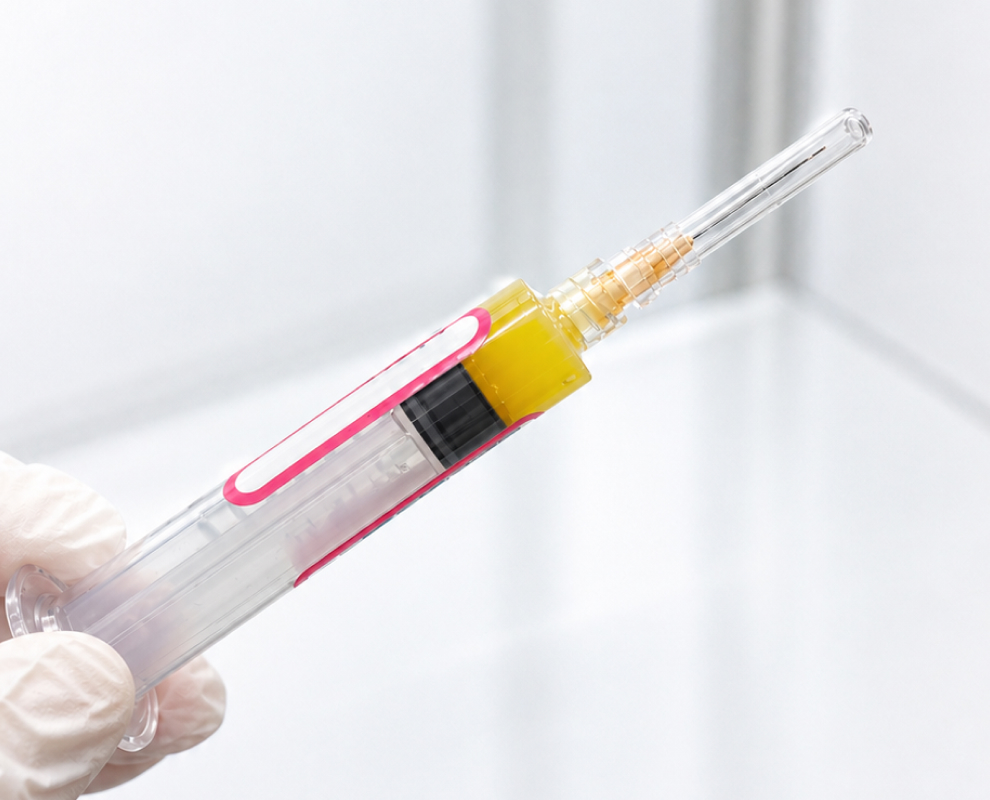
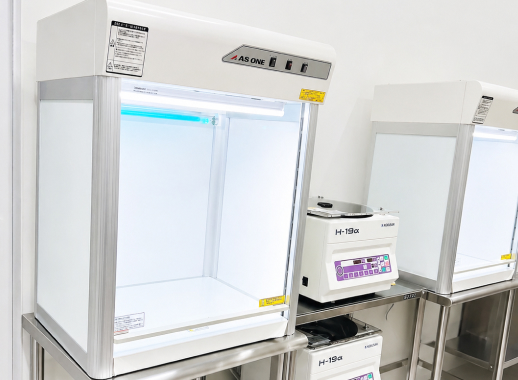
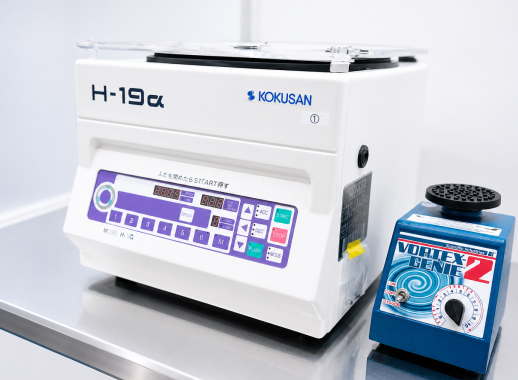
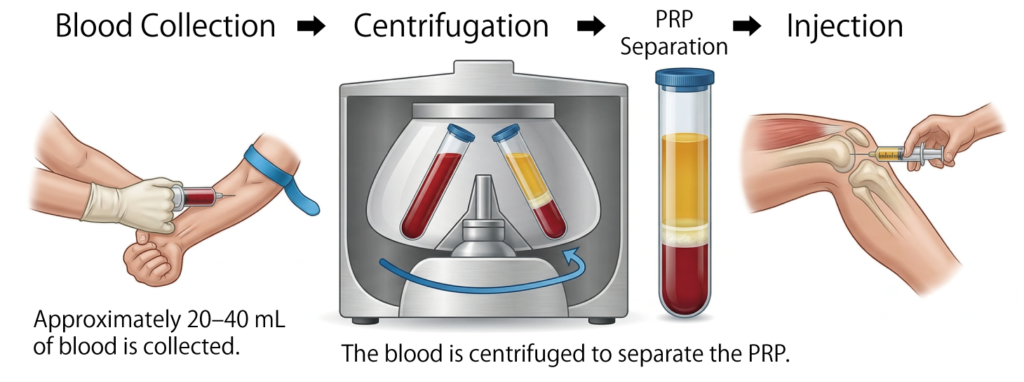
PRP preparation / Approx. 30–40 minutes / Same-day treatment (outpatient)
What Is TGOC® PRP Therapy?
PRP was defined by Dr. Robert Marx in 2001, with a platelet concentration of at least four times the normal baseline commonly cited as a target. At TGOC, we measure platelet counts and use a double-spin centrifugation method to achieve a high level of concentration.
We also classify PRP according to leukocyte content as leukocyte-rich PRP (LR-PRP) or leukocyte-poor PRP (LP-PRP), and select the type according to the patient and treatment area.
Our Approach to PRP Therapy: The TGOC® Protocol
High-precision concentration (double-spin method)
We use approved medical devices and a two-stage centrifugation process.
Quality control based on the MARSPILL classification
We measure platelet, white blood cell, and red blood cell counts in the prepared PRP and characterize the product according to the MARSPILL classification.
Individualized PRP composition
Depending on the condition and treatment site, we select either LR-PRP, which contains more leukocytes, or LP-PRP, which contains fewer leukocytes. The composition is tailored to each patient.
Fresh platelets (non-activated PRP)
We use non-activated PRP without adding external activating agents. This approach is intended to preserve the platelets’ natural growth-factor release process in the body, while maintaining their native exosomes and growth factors.
Ultrasound-guided injection
We use diagnostic ultrasound to guide the injection and deliver PRP accurately to the targeted area of inflammation or tissue injury.
PRP Standardization: MARSPILL Classification
The MARSPILL classification is one system used to describe PRP in detail based on seven characteristics of its preparation, quality, and composition. It allows PRP products to be evaluated more precisely and helps guide treatment planning for each patient.
M (Method): Preparation method
Identifies the centrifuge or device used and whether the preparation process is manual or automated.
A (Activation): Activation status
Indicates whether the platelets were activated in advance using substances such as calcium chloride or thrombin.
R (Red Blood Cells): Red blood cell content
Classifies the PRP according to whether red blood cells are present (RBC-rich) or largely removed (RBC-poor).
S (Spin): Number of centrifugation steps
Indicates whether centrifugation was performed once or twice (double spin).
P (Platelets): Platelet concentration
Describes the final platelet concentration in the PRP and the fold increase compared with the original whole blood.
I (Injections): Injection method
Records the injection site, number of injections, and whether image guidance such as ultrasound was used.
L (Leukocytes): Leukocyte content
Classifies the product as leukocyte-rich PRP (LR-PRP) or leukocyte-poor PRP (LP-PRP).
L (Light): Light activation
Indicates whether the preparation includes a process that uses light at a specific wavelength to stimulate platelets.
Why This Classification Matters
PRP products can differ significantly depending on blood composition and the preparation process. Using the MARSPILL classification helps make the characteristics of the PRP more transparent and supports evidence-based, quality-controlled treatment.
Frequently Asked Questions
What is PRP therapy?
A:PRP therapy uses a platelet-rich component prepared from your own blood and injects it into the painful or injured area. Growth factors released from platelets may support the body’s repair process, with the aim of reducing pain and improving recovery. It is an injection-based treatment and does not require surgery.
What types of PRP treatment do you offer?
A:We offer two options: Single PRP (1 kit) and Double PRP (2 kits). Double PRP uses two kits and therefore generally provides a larger amount of PRP. It may be considered for a wider treatment area or more significant symptoms.
What conditions may be treated with PRP?
A:PRP is mainly used for chronic pain and injuries involving joints, tendons, and ligaments. Examples include joint pain associated with osteoarthritis, tendon pain involving the patellar tendon, Achilles tendon, plantar fascia, elbow, or shoulder, and mild to moderate tendon or ligament injuries. Suitability is determined based on the clinical examination and imaging findings.
How long does it take to notice an effect?
A:PRP is generally not an injection that makes pain disappear immediately. Some patients notice changes within 1 to 2 weeks, while for others improvement may develop gradually over 1 to 2 months. The response varies from person to person.
How many treatments will I need?
A:In some cases, we assess the response after one treatment, while in others multiple treatments may be considered. The number depends on the treatment area, severity of the condition, and activity level. The treatment plan is discussed during your consultation.
Will cartilage or other tissues return completely to normal?
A:PRP is intended to support the body’s own repair process. It does not guarantee that deformed bone or worn cartilage will return completely to its original condition. The goal is to reduce inflammation, improve pain and function, and help limit worsening of symptoms.
Are there any side effects or risks?
A:Because PRP is prepared from your own blood, allergic or rejection reactions are generally unlikely. As with other injections, temporary pain, swelling, or bruising may occur at the injection site.
Can pain increase after the injection?
A:Yes. Pain may temporarily increase on the day of treatment or the following day. In most cases, it settles over time. Please contact us if severe pain, significant swelling, or persistent warmth develops.
When can I exercise again?
A:If you do not have significant pain, light exercise may be resumed from the following day. We generally recommend resting on the day of treatment. Return to sports or strength training should be gradual and adjusted according to the treatment area and your symptoms.
*This information is provided as general guidance for understanding our treatment approach and does not guarantee a specific treatment outcome.
Before Your Visit
How long does the treatment take?
A:From the blood draw to completion of the injection, the entire process usually takes about 30 to 60 minutes. After your blood is collected, there is a short waiting period while the PRP is prepared using a centrifuge. Once preparation is complete, the PRP is injected and you can return home the same day.
Can I receive PRP treatment if I take anticoagulants?
A:Treatment may still be possible, but please make sure to tell the physician in advance. Depending on the medication, it may take longer to stop bleeding after the injection or bruising may be more extensive.
Are there any dietary restrictions before treatment?
A:No. You may eat normally before treatment.
Can I take a bath on the day of treatment?
A:You may take a shower on the day of treatment. We recommend waiting until the following day before soaking in a bathtub. Please avoid rubbing the injection site.
Can I drink alcohol after treatment?
A:Please avoid alcohol on the day of treatment. You may resume drinking from the following day depending on how you feel.
How is PRP different from hyaluronic acid or steroid injections?
A:Hyaluronic acid injections are mainly used to improve joint lubrication, while steroid injections are used for their strong anti-inflammatory effects. PRP therapy is different in that it is intended to support tissue repair and the body’s healing response, with the goal of longer-term improvement.
Are there patients who may not be able to receive PRP treatment?
A:PRP treatment may not be appropriate for patients undergoing cancer treatment, those with an active infection, certain blood disorders such as thrombocytopenia, or during pregnancy. Please discuss your medical history with the physician during your consultation.
*This information is provided as general guidance for understanding our treatment approach and does not guarantee a specific treatment outcome.